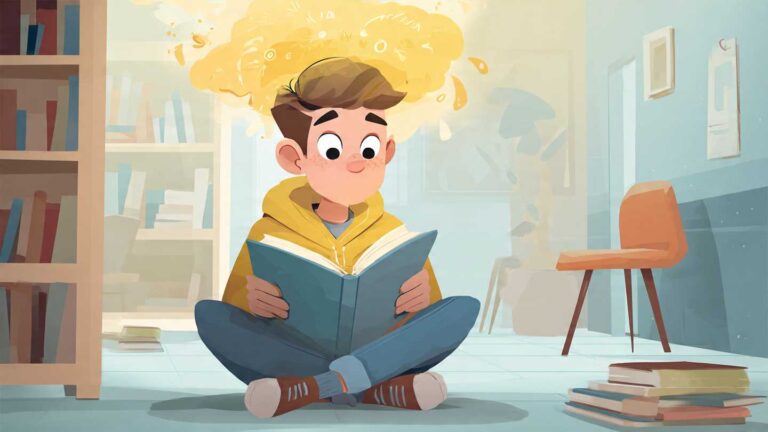
In this article we will discuss about thoughts, What If Students Could Read Each Others Thoughts? (The Classroom Without Secrets) A Psychological Exploration of Connection, Competition, and Chaos so, Imagine walking into your classroom one morning. You smile at your best friend, nod politely to your rival, and greet your teacher as usual – but suddenly, something feels strange.
You can hear thoughts.
- Your friend’s mind whispers, “I didn’t study last night.”
- Your teacher thinks, “Half the class looks half-asleep again.”
- Your rival’s thoughts echo, “I’ll beat him in this test today.”
The air feels heavy with silent noise. Every mind is now an open book. No lies, no pretense – but also, no privacy.
This thought experiment, while seemingly fictional, reveals something profound about student psychology, competition, and emotional balance. What would really happen if students could read each other’s minds?
Part 1: Academic Impact (The End of Guesswork)
1. Exams Without Anxiety: If every student could hear others’ thoughts, exams would become mental battlegrounds. Students could sense answers forming in others’ heads, steal ideas in real-time, or even detect fear and uncertainty. At first, this might seem like an advantage – no need for guesswork, no unfair surprises. But soon, chaos would rise. Who owns an idea when minds are shared? Where does honesty end and telepathic cheating begin?
Psychological insight: Students would learn that true confidence comes not from knowing others’ thoughts, but from trusting their own preparation. The mind’s independence becomes the real test.
2. Teachers Losing Authority: Teachers, too, would face a strange dilemma. Students could instantly sense when the teacher is unsure, bored, or biased. The invisible wall of respect might collapse. Classrooms would turn into psychological laboratories – with everyone analyzing everyone.
Lesson: Education thrives not on control, but on communication. Mind-reading might destroy fear, but it can’t replace respect built on understanding.
Part 2: Emotional Reality (Friendship in a Transparent World)
1. The Death of Small Lies
Friendship often survives on half-truths:
- “I’m fine.”
- “I’m not jealous.”
- “I’m happy for you.”
With telepathy, every emotion becomes visible. Jealousy, irritation, and secret admiration would be exposed instantly. While this might make relationships brutally honest, it would also make them fragile. Not everyone can handle raw truth daily.
Psychological insight: Students would realize that empathy – not truth – is what holds friendships together. Understanding why someone hides a feeling is more human than forcing honesty.
2. Romantic Confusion
Teenage years already overflow with emotions. Now imagine knowing exactly what your crush thinks about you – every hesitation, every private fantasy, every doubt. The thrill of mystery would vanish. Relationships would lose their depth because surprise fuels attraction.
Lesson: Love requires space. When minds merge completely, affection turns mechanical. Students would rediscover why emotions need mystery to stay alive.
Part 3: The Social Experiment (A School of Open Minds)
1. No More Group Politics: In a telepathic world, gossip dies instantly. You’d know who truly likes you and who pretends. Group studies would be more efficient – but less fun. The emotional “drama” that teaches negotiation, trust, and forgiveness would disappear.
Insight: Conflicts and misunderstandings, though painful, are essential for emotional maturity. A mind without friction never grows stronger.
2. Competition Reimagined: In competitive exams, students often compete silently. With mind-reading, comparison becomes unavoidable – you’d hear others’ doubts, confidence, or even their moment of realization. Some would thrive under this psychological intensity. Others would crumble under pressure.
Psychological effect: Such constant awareness might create “performance anxiety 2.0” – where the fear of others’ thoughts replaces fear of failure itself.
The brain would never rest, always tuned to others’ mental signals.
Also read: What Happens When Students Don’t Listen to Their Teachers?
Part 4: Inner Conflicts (The Price of Total Awareness)
1. Loss of Private Space: Every student has private thoughts – daydreams, regrets, random fears, creative imaginations. If those were public, students might stop thinking freely altogether. Creativity could collapse, replaced by social fear: “What will others think if they hear this?”
Insight: Freedom of mind exists because thoughts are private. When privacy dies, authenticity dies with it.
2. Emotional Burnout: Hearing dozens of minds constantly would be overwhelming. Imagine studying while 40 inner monologues echo in your head. The mental noise could cause exhaustion, confusion, or even depression.
Psychological truth: Silence is not emptiness – it’s protection. Students would crave solitude more than social validation.
Part 5: Deep Imagination (A Day in a Telepathic Classroom)
- Morning Assembly: Students know which teachers dislike speeches, which students forgot the lyrics, and who secretly wishes for rain to cancel class. The energy feels real but crowded.
- Mid-Lecture: The topper answers a question confidently, but everyone hears their self-doubt. The average student realizes – geniuses have fear too. For the first time, competition feels human.
- Lunch Break: Some groups form silent pacts – to mute thoughts or build “mental walls.” Others exploit weaknesses, making subtle bullying more psychological than physical.
- Evening Study Session: Silence spreads not because students are calm, but because they’ve learned to build inner filters – a modern version of discipline and focus.
Part 6: Philosophical Reflection (Would Humanity Survive Honesty?)
If everyone’s mind were open, society might collapse before it evolved. Students would understand the ancient truth: “Peace doesn’t come from knowing everything; it comes from knowing enough and respecting the unknown.”
The dream of total understanding would turn into a nightmare of endless exposure. Perhaps the greatest wisdom lies in not knowing everything, allowing space for mystery, forgiveness, and imagination.
Part 7: The Hidden Lessons
- Emotional Intelligence > Telepathic Intelligence: Knowing someone’s thoughts is easy; understanding their pain is not.
- Privacy Protects Peace: A private mind is not a selfish one – it’s a balanced one.
- Truth Without Empathy Hurts: Brutal honesty may destroy bonds that gentle silence could heal.
- Connection Needs Boundaries: Healthy relationships thrive when thoughts are shared selectively, not continuously.
- Focus Is the Real Superpower: In a world of open minds, the student who can silence external noise wins.
Conclusion: The Unreadable Mind Is the Most Beautiful
If students could read each other’s thoughts, education would change forever – but not necessarily for the better. They would realize that not every secret deserves to be revealed, not every thought deserves to be heard, and not every truth deserves to be spoken.
Human connection thrives because of curiosity, not certainty. The unreadable mind is what makes friendship meaningful, love magical, and self-growth infinite.
So perhaps, in the grand classroom of life, the ability to not read minds is what keeps our humanity intact.

Top 10 Telepathic Classroom Scenarios: Lessons for Students
Exploring what could happen if students could read minds and the insights they’d gain:
| Situation | Psychological Effect | Real-World Lesson |
|---|---|---|
| 1. Reading classmates’ exam prep thoughts | Anxiety spikes as students compare every answer | Focus on self-improvement, not constant comparison |
| 2. Sensing teachers’ bias or fatigue | Disillusionment or loss of authority perception | Respect is earned through communication, not observation |
| 3. Discovering friends’ hidden jealousy | Shock, trust issues, or social discomfort | Empathy matters more than absolute transparency |
| 4. Hearing romantic crushes’ inner doubts | Loss of mystery and excitement in relationships | Some privacy keeps relationships natural and meaningful |
| 5. Detecting peer gossip in real-time | Increased stress and mental noise | Not all information needs attention; filter wisely |
| 6. Experiencing constant social evaluation | Overstimulation, performance pressure | Develop inner resilience and focus; silence is a superpower |
| 7. Witnessing hidden fears of classmates | Compassion and understanding rise | Emotional intelligence outweighs telepathic knowledge |
| 8. Realizing that high achievers have self-doubt | Reduced intimidation but cognitive overload | Everyone struggles internally; confidence is personal, not comparative |
| 9. Feeling mental burnout from continuous thoughts | Mental exhaustion, distraction, frustration | Boundaries are essential for healthy mind and productivity |
| 10. Attempting to control or manipulate others’ thoughts | Ethical conflict, guilt, social tension | True influence comes from communication and trust, not control |
FAQs: Students and Mind-Reading Psychology
Have you ever imagined knowing exactly what your classmates are thinking?
Yes, many students daydream about telepathy, imagining advantages like predicting answers or avoiding embarrassment. However, this reveals our desire for certainty in unpredictable social and academic situations.
What psychological effects could mind-reading have on students?
It could create anxiety, overthinking, and mistrust. Constantly knowing others’ thoughts may feel invasive and mentally exhausting, showing how privacy shapes healthy relationships.
Could mind-reading improve academic performance?
Only partially. While it may reveal hints or strategies, true learning comes from understanding and applying knowledge. Dependence on telepathy could reduce critical thinking and personal effort.
How would friendships change if telepathy existed in classrooms?
Friendships might face challenges, as hidden jealousy, doubts, or personal opinions become instantly visible. It teaches that trust and communication are more important than knowing everything.
Would romance lose its excitement if students could read minds?
Yes. Mystery and subtle cues make relationships meaningful. If every thought were exposed, curiosity and emotional discovery could vanish.
How could students handle the overload of hearing multiple minds at once?
They would need boundaries, focus strategies, and mindfulness. This highlights the importance of managing mental energy and protecting one’s attention even without telepathy.
Can mind-reading teach empathy or understanding?
Absolutely. Hearing classmates’ struggles or fears can build compassion and social awareness. It emphasizes listening and emotional intelligence as key life skills.
Is mind-reading ethically safe for students?
No. Knowing others’ private thoughts could lead to manipulation, guilt, or social tension. Ethical boundaries and respect for privacy remain crucial lessons.
Could telepathy reduce competition stress in schools?
Potentially, as students would understand others’ struggles. Yet, constant exposure to academic pressure and comparisons could also increase anxiety, showing that internal resilience matters more than shortcuts.
What is the main takeaway from imagining mind-reading in student life?
Students learn that understanding, communication, empathy, and self-awareness are far more valuable than knowing every thought. True social and academic growth comes from human interaction, not telepathy.