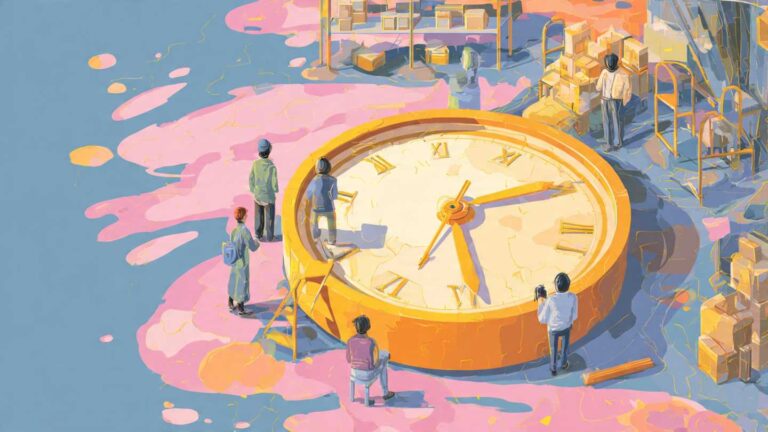
In this article we will discuss about a topic STUDENTs and TIME, What If Students Could Pause Time? A Deep Psychological Reflection on Freedom, Stillness, and the Illusion of Control (The Clock Stops, But You Don’t) Imagine this: it’s 7:59 AM, your alarm screams, and you whisper, “Just five more minutes.” But this time, those five minutes actually freeze. The fan halts mid-spin, birds stop mid-air, and even the ticking clock is silent. The world stands still – except you.
- You, the student, the dreamer, the thinker, are now outside of time itself. No deadlines, no classes, no exams, no messages. Just silence – deep, powerful, almost terrifying silence.
- It sounds like a fantasy, but psychologically, this imagination reveals one of humanity’s deepest desires: the wish to control time, to escape pressure, to own a moment completely.
Let’s explore what happens when students step into this suspended world – where time bows to thought.
Phase 1: The First Pause (Freedom from the Rush)
The first instinct? Relief. Students, burdened by schedules, assignments, and social expectations, feel an almost divine sense of freedom. They walk through frozen corridors, stand before stopped clocks, and realize: they finally have time – pure time.
- The Tired Mind Restarts: Without deadlines, sleep returns, not forced but natural.
- The Unfinished Tasks Resurface: Notes, journals, sketches – all find attention.
- The Desire to Breathe: For the first time, students sense how fast they were running without noticing their exhaustion.
But freedom, without direction, soon becomes emptiness. The mind begins to wonder – if time cannot move, can I?
Phase 2: The Power Paradox
At first, the ability to stop time feels like godhood.
- You could peek at question papers before exams.
- You could finish every project perfectly.
- You could even walk through a world where no one sees you.
But then, a strange paradox unfolds. Power without consequence feels meaningless.
- Grades Lose Value – if you can perfect everything, there’s no challenge left.
- Relationships Freeze – emotions don’t flow when others are paused.
- Meaning Dissolves – when there’s no urgency, passion begins to fade.
The mind, once obsessed with control, now longs for unpredictability. Students start realizing that the beauty of life lies not in stillness, but in motion.
Also read: What If Students Could Time Travel?
Phase 3: The Psychological Mirror (Facing the Self)
When time stops, the world’s noise vanishes. No voices, no notifications, no judgments.
Only one sound remains – your own thoughts.
For many students, this silence becomes a mirror.
- Regrets Surface: Missed chances, ignored friendships, abandoned dreams.
- Truths Emerge: They see what they truly value – not what society told them to.
- Identity Forms: Without the pressure to “perform,” they begin to “be.”
It’s both peaceful and painful – because silence reveals what busyness hides.
In this paused world, students confront their own insecurities and strengths. They discover that time was never their enemy – distraction was.
Phase 4: When the Pause Turns into Prison
As days pass in frozen time, a new fear awakens – what if the clock never moves again?
At first, stillness felt liberating. Now, it feels like being trapped in perfection. No change. No growth. Just endless repetition of one moment.
The student begins to crave time again. Not for deadlines or achievements – but for the heartbeat of life itself.
This realization is profound:
“Without time, there is no meaning. Without change, there is no story.”
Psychologically, this reflects how humans depend on progress to feel alive. We don’t just live in time – we become through time.
Phase 5: The Awakening (Restarting the Clock)
Finally, the student decides to unpause the world.
- The clock ticks again – softly, like forgiveness. People move, sounds return, chaos resumes.
But the student is no longer the same. Something within has shifted. They now understand that the purpose of life is not to control time but to harmonize with it.
They walk slower, breathe deeper, focus better. Every second feels valuable – not because it can be paused, but because it cannot.
The Fantasy Twist (If Pausing Time Became Real)
Let’s imagine this scenario more boldly. What if pausing time became a real technology, available to students like a smartwatch feature?
- Academic Chaos: Exams would become meaningless. Every student could “pause and prepare.” Education would collapse without honesty.
- Emotional Distortion: Relationships would lose trust. Imagine pausing mid-conversation to change your answer. Authenticity would die.
- Moral Confusion: If no one sees your actions, what defines right and wrong? Ethics rely on consequence – without time, there are none.
- Existential Fear: Eventually, humans would crave imperfection again. The heartbeat of existence depends on flow, not freeze.
This imagination teaches a timeless truth: control without purpose destroys meaning.
Lessons for Students
| Theme | Insight | Lesson |
|---|---|---|
| Freedom | True freedom isn’t escaping time, but managing it wisely. | Learn to balance rest, work, and reflection. |
| Control | Total control leads to emptiness. | Embrace uncertainty as part of growth. |
| Silence | Stillness reveals inner truth. | Spend daily moments in digital silence. |
| Regret | Stopped time brings hidden emotions to surface. | Don’t wait to fix things – act now. |
| Meaning | Movement gives life its story. | Let every second carry purpose, not pressure. |
Conclusion: The Gift of Flow
Pausing time may sound divine, but its real purpose is not escape – it’s awareness. When students stop chasing every second and start living every second, life becomes richer, calmer, and infinitely more meaningful. The truth is, time is not the enemy. It’s the canvas and every student, with their thoughts, dreams, and discipline, is the artist.
So instead of wishing to stop the clock, learn to dance with it. Because the greatest power isn’t in freezing time – it’s in flowing through it with purpose.
Top 10 Situations + Psychological Effects + Real-World Lessons
Exploring the unseen layers of a student’s fantasy to pause time.
| Situation (If Time Could Pause) | Psychological Effect on Students | Real-World Lesson / Insight |
|---|---|---|
| 1. Freezing Time Before Exams | Relief and confidence rise, but anxiety becomes externalized – dependence on fantasy grows. | Time control isn’t the solution; preparation and emotional stability are. |
| 2. Stopping Time During Embarrassing Moments | Reduces social anxiety temporarily, but prevents emotional growth. | Facing awkwardness builds social intelligence; escape delays maturity. |
| 3. Pausing Time for Extra Sleep | Short-term comfort creates long-term guilt – a symbol of procrastination. | Rest should come from balance, not avoidance. Sleep through discipline, not fantasy. |
| 4. Using Frozen Time to Study More | Sense of superhuman ability, but eventually boredom and burnout follow. | Efficiency matters more than hours; time quality beats quantity. |
| 5. Fixing Mistakes in Conversations or Exams | Over-control weakens self-acceptance; perfectionism grows. | Imperfection teaches resilience. Learning from errors builds stronger minds. |
| 6. Escaping Parental or Teacher Pressure | A feeling of temporary independence hides deeper emotional fatigue. | Communication, not escape, creates real emotional freedom. |
| 7. Exploring a Frozen World Alone | Feels powerful at first but soon becomes isolating and existentially empty. | True joy comes from shared experience, not solitary control. |
| 8. Helping Others Secretly in Paused Time | Boosts empathy and altruistic satisfaction; moral purpose strengthens. | Real heroism is using time while it moves to help others. |
| 9. Watching Others Silently While Time is Frozen | Creates voyeuristic curiosity, even guilt – tests one’s ethical limits. | Power without conscience is dangerous; empathy defines morality. |
| 10. Living Entire Days in Paused Reality | Psychological fatigue, detachment, and loss of purpose emerge. | Growth comes from motion and change; timelessness is stagnation disguised as peace. |
Interpretation Summary
The dream of pausing time mirrors a student’s inner tension between control and surrender.
They don’t truly want to escape time – they want to master it. This fantasy, when understood, becomes a tool for emotional intelligence: the art of pausing the mind, not the world.
Top 10 FAQs About “What If Students Could Pause Time?”
1. Why do students often wish they could pause time?
Because modern academic life is built on constant deadlines, pressure, and comparison. The desire to pause time symbolizes a subconscious need for rest, self-control, and escape from external expectations.
2. What does the fantasy of stopping time reveal about the student mind?
It shows a psychological craving for autonomy – the wish to own one’s pace, thoughts, and emotions. Students often feel controlled by systems, so the idea of freezing time becomes a metaphor for regaining inner authority.
3. Could pausing time actually make students happier?
Only temporarily. Psychological studies suggest that joy comes from progress, not stillness. A permanent pause might cause confusion, boredom, and existential emptiness because purpose requires movement.
4. What lessons can students learn from the dream of freezing time?
They can learn time-management, mindfulness, and emotional balance. The fantasy teaches that even if we cannot stop time, we can slow our mind – by focusing, meditating, and avoiding digital distractions.
5. How is “pausing time” connected to procrastination?
Both stem from avoidance. Procrastination is the real-world version of wanting time to stop – a hidden wish to delay responsibility or fear of failure. Understanding this link helps students overcome it consciously.
6. Would the world still feel meaningful if time stopped?
No. Meaning is built through change, relationships, and growth – all of which require the flow of time. A timeless world would erase achievement, memory, and emotional depth.
7. How does this imagination relate to meditation and mindfulness?
Meditation doesn’t stop time but slows perception. It allows students to experience the quality of a moment rather than its speed. It’s a real-life way to experience mental stillness without breaking natural order.
8. Could pausing time improve creativity or focus?
Symbolically, yes. The idea reflects the need for mental pauses – moments of deep focus and detachment. When students create “mental silence,” creativity and concentration naturally rise.
9. What dangers exist if humans could actually control time?
Ethical and psychological dangers. Without consequences, morality collapses. Without urgency, ambition fades. Total control over time could destroy the balance that keeps society and identity alive.
10. What is the deeper philosophical message behind this idea?
That true peace isn’t found by stopping time, but by aligning with it. Every second is both fleeting and infinite – depending on awareness. Students who learn this live more meaningfully, even within ordinary time.