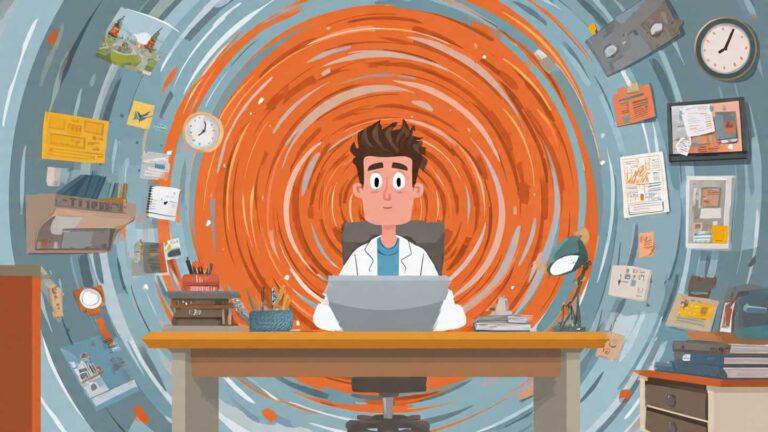
What If Students Could Time Travel? A Journey Through Regret, Ambition, and the Psychology of “If Only” (The Time Machine Every Student Dreams Of) so, Every student, at least once, has imagined having a time machine. Maybe after a bad exam, they whisper, “If only I could go back one day earlier” or Maybe before an interview, they wish, “If I could just relive that moment, I’d do better.”
This fantasy isn’t about science fiction alone – it’s about control, regret, and second chances. Time travel represents the deepest human desire to fix mistakes, relive moments, and shape destiny. For students, it reflects the tension between what was, what is, and what could have been.
Let’s explore what would truly happen if students could travel through time – not as a superhero story, but as a psychological journey through learning, ambition, and acceptance.
Part 1: The Academic Temptation (“I’ll Go Back Before the Exam”)
Imagine being able to go back one week before an exam. You already know every question, every mistake you’ll make – and now, you can fix them. At first, it seems like the perfect dream: no stress, no surprises, perfect marks every time.
But what happens next?
- Learning loses meaning.
If you already know the result, studying becomes mechanical. Curiosity dies. - Effort loses value.
Without struggle, success feels hollow. Students may achieve more but feel less proud. - Life becomes predictable.
Repeating perfection removes the spark of uncertainty that makes achievement meaningful.
In short, time travel may eliminate mistakes – but it also erases growth.
Part 2: The Personal Side (Fixing Past Embarrassments and Failures)
Many students imagine time travel not for exams, but for emotions. The chance to undo a broken friendship, a rejected proposal, or a harsh argument.
Psychologically, this reflects our need for redemption – the wish to rewrite painful memories. But if you erase every bad moment, you also erase:
- The strength you gained after heartbreak.
- The humility you learned from failure.
- The wisdom you found through regret.
Every mistake that students wish to undo actually shapes the emotional intelligence they need for adult life.
Time travel might make life smoother – but not stronger.
Also read: What If Students Could Erase Memories? (Forgetting Fantasy)
Part 3: The Future Trip (Seeing Tomorrow Before It Happens)
Now imagine going forward in time: seeing your results, job, or even your future relationships. At first, it sounds thrilling – a shortcut to destiny.
But psychology warns: certainty kills motivation. When students already know the outcome – good or bad – they lose the purpose to try.
- If the future looks bright, overconfidence leads to laziness.
- If the future looks dark, hopelessness replaces ambition.
Time travel to the future removes the mystery that fuels human progress.
Because it’s the not knowing that makes effort meaningful.
Part 4: The Butterfly Effect (One Change Can Change Everything)
In movies like The Butterfly Effect and Back to the Future, changing one small thing in the past creates massive changes in the present.
For students, it could mean:
- Fixing one bad mark that changes their entire career path.
- Meeting one person that alters every later decision.
Psychologically, this mirrors the idea that every small choice matters – not because we can change the past, but because we are constantly shaping the future through daily actions. Time travel, in this sense, isn’t fiction; it’s a metaphor for accountability.
Part 5: The Ethical Dilemma (Should You Change Time, Even If You Could?)
If a student could really go back and change one moment – say, to help a friend or prevent an accident – would it be right?
Ethically, it raises serious questions:
- Does saving yourself mean changing someone else’s destiny?
- If you fix one failure, do you steal another person’s chance to learn?
- Would you ever stop going back once you start correcting everything?
In philosophy, this reflects the paradox of perfection – when people chase flawlessness so hard, they lose their sense of self. True growth isn’t about fixing the past – it’s about transforming because of it.
Part 6: The Psychology of “If Only” Thinking
Students often live in the mental space of “If only…”
- If only I had started earlier.
- If only I hadn’t wasted that semester.
- If only I had taken that course or believed in myself.
Psychologists call this counterfactual thinking – replaying past events and imagining alternate outcomes.
It’s natural and even useful – it teaches reflection. But when it becomes obsessive, it turns into regret paralysis – a loop where students keep analyzing the past instead of building the present.
The lesson? – We don’t need a time machine, we need self-compassion and forward focus.
Part 7: A Day in the Life of a Time-Travelling Student
Let’s imagine this world for a moment:
- A student rewinds 10 minutes before an embarrassing class answer.
- Replays a conversation with their crush to sound more confident.
- Fast-forwards through boring lectures.
- Jumps back before every test to always top the class.
At first,
- life feels perfect.
- But slowly, boredom creeps in.
- Because without failure, there’s no surprise.
- Without struggle, there’s no pride.
They begin to realize: the most beautiful part of student life wasn’t success – it was trying again.
Part 8: Real Science (Can Time Travel Ever Be Possible?)
Physics has theories that flirt with the idea of time manipulation. Einstein’s Theory of Relativity allows time dilation – time slows down near light speed. Quantum mechanics hints at multiple timelines and wormholes.
But for now, these remain theoretical and paradoxical. Even if time travel became possible someday, it would create unsolvable contradictions. The grandfather paradox, for example: if you went back and prevented your own birth, how could you have traveled in the first place?
Science says: We may bend time – but never own it.
Part 9: The Real Power (Mental Time Travel)
While physical time travel may be impossible, mental time travel is real and powerful.
Humans can project their minds backward (memory) and forward (imagination). Students can use this ability wisely:
- Reflect on past mistakes without guilt.
- Visualize the future without fear.
- Create detailed mental simulations to plan better outcomes.
This form of psychological time travel builds emotional resilience – the ability to learn from the past and act wisely in the present.
Part 10: What If Students Could Time Travel (Summary Table)
| Situation | Psychological Meaning | Lesson for Real Life |
|---|---|---|
| Going back to fix exam mistakes | Regret and perfectionism | Learn to improve forward, not backward |
| Re-living embarrassing moments | Fear of judgment | Confidence grows from vulnerability |
| Seeing your future career | Anxiety or overconfidence | Focus on present effort, not future fear |
| Preventing a failure | Control obsession | Failure is feedback, not final |
| Meeting your past self | Inner reflection | Forgive the past, honor the growth |
| Saving a friend’s moment | Empathy and moral weight | Help others in real time, not rewind time |
| Skipping boring moments | Escapism | Learn patience; growth hides in repetition |
| Changing love outcomes | Desire for validation | True connection can’t be edited |
| Living perfect timelines | Loss of curiosity | Imperfection creates meaning |
| Stopping all bad events | Playing god | Wisdom is knowing what not to change |
Conclusion: Time Moves Forward for a Reason
If students could truly time travel, they might fix every mistake – but they would also erase the experiences that made them human. The purpose of time is not to be paused or reversed, but to teach evolution.
- Students don’t need a time machine.
- They need awareness – the courage to face yesterday, live today, and shape tomorrow.
- Because the truth is simple: Those who use their time wisely today never need to go back and change it tomorrow.
Top 10 Time Travel Scenarios, Psychological Meanings, and Real-Life Lessons for Students
| Time Travel Situation | Psychological Meaning | Real-Life Lesson / Takeaway |
|---|---|---|
| 1. Rewatching the Moment Before a Big Exam | Represents anxiety over performance and fear of failure. Students often idealize “perfect preparation.” | The present is always imperfect. Focus on progress, not perfection – confidence grows from consistency, not rewinds. |
| 2. Visiting the First Day of College Again | Symbolizes nostalgia and the longing for simpler, unpressured beginnings. | Embrace change. Growth only happens when comfort zones are replaced by new experiences and responsibilities. |
| 3. Trying to Stop a Friendship from Breaking | Reflects emotional dependency and guilt over social loss. | Relationships evolve with time – don’t chase the past; invest in communication and empathy in the present. |
| 4. Traveling to the Day of a Rejected Dream Job or Exam Result | Represents unresolved disappointment and comparison with others. | Failure is a data point, not a destiny. The real skill is to reinterpret rejection as redirection. |
| 5. Meeting Your Future Self 10 Years Later | Reveals curiosity about identity, maturity, and hidden fears of not “becoming enough.” | Instead of waiting to meet your future self, build that version through daily discipline and values. |
| 6. Pausing Time Right Before a Big Mistake | Reflects the brain’s instinct to avoid pain and control uncertainty. | Mistakes are essential for emotional calibration – don’t fear them, learn faster from them. |
| 7. Watching the “Alternative You” Who Made a Different Choice | Symbolizes the “parallel life” illusion – believing happiness exists in another version of reality. | Every decision closes one door but opens others. Peace comes from committing to your path, not comparing timelines. |
| 8. Jumping to the Future to Skip Struggles | Represents escapism from effort, a fantasy of instant success. | Growth happens in the struggle. The shortcut mindset kills real potential – endurance builds identity. |
| 9. Going Back to Relive Childhood Innocence | Reflects mental fatigue and desire for emotional safety. | You can’t return to innocence, but you can rebuild curiosity – by learning without judgment or fear of outcome. |
| 10. Stopping Time During a Perfect Moment | Symbolizes the fear of losing happiness and attachment to temporary joy. | Joy is meant to move, not freeze. Let moments flow – happiness becomes lasting when you stop trying to trap it. |
Final Thought
Students dream of time travel because they wish for control over life’s chaos but every moment – good or bad – contributes to who they are becoming.
Time may not bend, but the mind can and when a student learns to master focus, reflection, and discipline, they’ve already achieved the real miracle of time travel – turning every past regret into present strength.
Top 10 FAQs About Time Travel and the Student Mindset
1. Why do students often wish they could go back in time?
Students frequently replay the past to correct mistakes or perform better in exams and relationships. Psychologically, this reflects regret and the desire for control – a natural coping mechanism when they feel powerless in the present.
2. What does time travel symbolize in a student’s psychology?
Time travel symbolizes the search for second chances. It represents the wish to erase failure, avoid pain, and achieve perfection – but also reveals how deeply students crave balance and understanding in their chaotic academic lives.
3. How would life change if students could actually time travel?
Initially, students might feel liberated – no failed tests, no missed opportunities. But over time, life would lose meaning. Without uncertainty and struggle, growth, motivation, and creativity would vanish. Every success would feel hollow.
4. Can regret be useful even without time travel?
Yes. Regret, when reflected on correctly, becomes a learning emotion. It helps students analyze choices, build resilience, and make better future decisions. It’s not about going back – it’s about growing forward.
5. What happens psychologically if we keep imagining “what if” scenarios?
This is called counterfactual thinking. A little of it helps self-improvement, but too much leads to rumination – an endless loop of guilt and comparison. Students must balance reflection with present action to avoid emotional burnout.
6. Is mental time travel (imagining the past or future) scientifically real?
Yes. Neuroscience confirms that humans can “time travel” mentally through memory and imagination. The hippocampus allows us to reconstruct past experiences and simulate possible futures – a skill essential for learning, planning, and emotional intelligence.
7. Could time travel ever be scientifically possible?
According to Einstein’s Theory of Relativity, time slows near light speed or intense gravity – so, in theory, forward time travel might be possible. But traveling backward remains paradoxical, creating logical contradictions science hasn’t solved.
8. Would knowing the future make students happier or more anxious?
Most likely more anxious. If the future looks bad, it may create hopelessness; if it looks good, it may cause complacency. Human motivation thrives on mystery – the effort to create the unknown future gives life purpose.
9. What can students learn from the idea of time travel?
The greatest lesson is self-awareness. Students don’t need to change the past; they need to understand it. Every mistake, heartbreak, and challenge is part of their mental evolution – their personal timeline of becoming wiser and stronger.
10. How can students “control time” in real life without science fiction?
By mastering time management, focus, and mindfulness. When students learn to stay fully present, they experience time differently – slower, richer, and more fulfilling. True time control isn’t about physics; it’s about psychology.