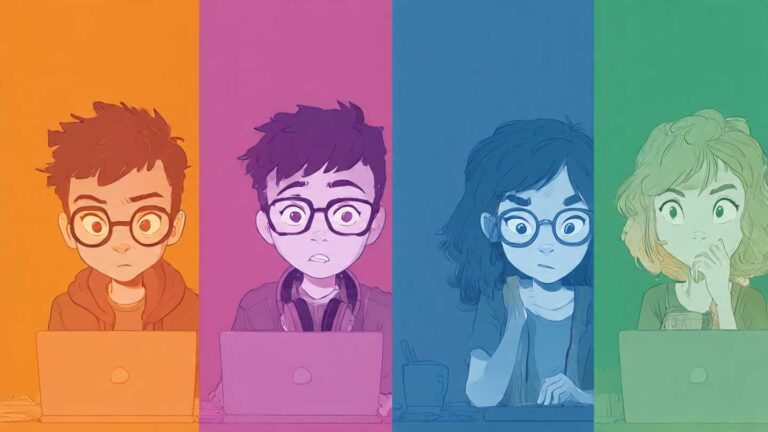
In this article we will discuss, What Is Color-Coded Daydreaming in Students? (When Imagination Paints in Color) so,
- Every mind dreams, but not every mind dreams in black and white.
- Some students describe their imagination in shades, textures, and light. When they daydream, they don’t just think in words or images; they
- feel colors. A memory might appear blue, a mathematical formula might glow yellow, and an upcoming exam might look like a storm of gray and red.
This phenomenon, known as Color-Coded Daydreaming, is the intersection of imagination, emotion, and sensory symbolism. It’s not a disorder or fantasy, it’s a window into how the human brain transforms emotion into color to process thought, memory, and meaning.
1. Understanding Color-Coded Daydreaming
Color-coded daydreaming refers to a form of internal visualization where a person’s thoughts, feelings, or memories appear naturally connected with colors. Students who experience it often report that different subjects, moods, or ideas evoke distinct color tones.
Examples include:
- Thinking of mathematics as metallic silver or cool blue.
- Associating literature or poetry with warm amber tones.
- Remembering happy childhood events in gold or bright yellow.
- Feeling anxiety as dark red or grayish hues in mental space.
For such students, imagination becomes a painted thought, an emotional color map that helps them organize and make sense of their experiences.
2. The Psychology Behind Color-Coded Imagination
Color-coded daydreaming is deeply connected to synesthetic cognition, a neurological trait in which sensory experiences overlap. While synesthesia often links sounds with colors or letters with personalities, color-coded daydreaming is a lighter, more emotional version — where the mind spontaneously assigns color associations to abstract concepts.
- Psychologists call this phenomenon emotional synesthesia or symbolic cognition.
- It occurs when the brain’s visual cortex and limbic system (emotion center) communicate intensely.
- The result? The mind doesn’t just think feelings — it paints them.
This is why many creative students — writers, artists, or even scientists — visualize ideas as colored moods. Their minds use color as a nonverbal emotional vocabulary.
3. Why Some Students Think in Color
Not every student experiences color-coded imagination equally. It often appears in:
- Highly creative or intuitive learners — those with strong visual or sensory intelligence.
- Emotionally sensitive students who deeply internalize mood and tone.
- Visual or kinesthetic learners who recall information better through color or movement.
Studies on multisensory processing show that creative brains often have stronger neural connections between visual, auditory, and emotional regions. This allows ideas to translate into colors and feelings automatically — a kind of emotional coding system that personalizes learning.
4. Examples of Color-Coded Daydreaming in Learning
1. Emotional Subjects
- A student may see History as earthy brown because it feels grounded and old.
- Science may appear metallic silver, representing precision and clarity.
- Language learning might glow pastel or lavender, signifying fluidity and emotion.
2. Memory and Revision
- Some students mentally color-code information: red for definitions, green for examples, blue for key concepts.
- During exams, they visualize these color zones and retrieve information faster — their memory literally works like a color-coded map.
3. Emotional Regulation
- When stressed, they may imagine calming blue oceans or warm orange sunlight.
- This self-generated imagery helps manage anxiety, turning daydreaming into emotional regulation rather than distraction.
5. Color Psychology: The Emotional Palette of Learning
Each color carries a universal psychological weight. Students who daydream in color often assign meanings that mirror general emotional associations:
| Color | Common Emotional Meaning in Students |
|---|---|
| Blue | Calmness, clarity, peace, and trust. Often linked with analytical subjects. |
| Red | Intensity, pressure, competition, or energy. Appears during stress or motivation. |
| Green | Balance, learning growth, nature, and renewal. Associated with curiosity or discovery. |
| Yellow | Hope, optimism, and creative joy. Common during artistic or language activities. |
| Purple | Deep thought, imagination, and philosophical reflection. |
| Gray/Black | Confusion, fatigue, or emotional heaviness during academic stress. |
| White | Simplicity, new beginnings, or clarity of understanding. |
Understanding these inner color associations helps teachers recognize students’ emotional states — even when they can’t express them verbally.
6. The Link Between Emotion and Academic Performance
When a student’s imagination is color-coded, learning becomes an emotional experience. Psychologists emphasize that emotions determine attention and memory strength. If a subject “feels” a certain way, it becomes easier to recall.
For example:
- A student who associates Biology with green may find it naturally energizing.
- A student who sees red or gray when thinking of Mathematics might subconsciously associate it with stress or competition.
Once recognized, these patterns can be gently reframed. Teachers can help students repaint negative emotional colors into positive ones through supportive environments, aesthetic classrooms, or visualization techniques.
7. How Teachers Can Recognize and Nurture Color Thinkers
- Ask sensory questions — “If this subject had a color, what would it be?” reveals emotional perception.
- Use color-coded notes and mind maps to engage visual learners.
- Allow artistic expression in assignments, encouraging doodles or metaphoric color references.
- Avoid labeling colorful imagination as distraction — it’s often a sign of deep internal processing.
- Integrate emotion and design in classroom spaces — lighting, color boards, and visual stimuli can affect emotional engagement.
Color-coded imagination isn’t escapism; it’s a learning superpower disguised as daydreaming.
8. The Therapeutic Side of Color-Coded Daydreaming
Beyond learning, color imagery helps students process emotions. Art therapy and expressive writing programs often use color association to understand subconscious feelings.
For instance:
- Drawing “how my week felt” with colors reveals hidden emotional patterns.
- Visualizing success as golden light or calmness as blue water can anchor positivity.
These exercises transform passive daydreaming into guided introspection — allowing students to self-soothe, reframe failure, and develop resilience.
9. The Risk of Misinterpretation
Some adults or educators misunderstand color-based daydreaming as fantasy or inattention. In reality, students who see or feel in color are often highly attuned to their environments. Their brains simply translate experiences through sensory language. However, if color associations become overwhelming (for instance, constant red or gray imagery linked to fear), it might signal emotional overload. In such cases, gentle counseling or creative journaling helps restore emotional balance.
10. Color-Coded Daydreaming in the Digital Age
With the rise of digital learning, visual overload is common.
- Ironically, color-coded daydreaming can serve as a protective mechanism.
- It helps students internalize digital information through emotional tagging, preventing burnout from endless screen time.
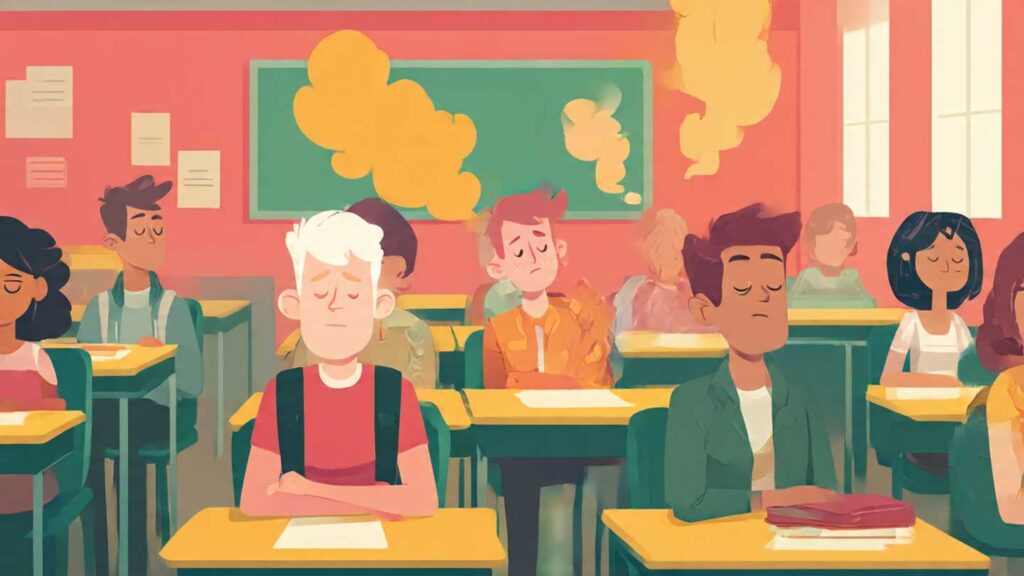
For instance, after a long online class, a student might mentally convert key ideas into colors — a quiet act of organization that blends technology with intuition.
This shows that even in a hyper-digital world, the imagination still paints quietly behind the eyes.
11. Techniques for Students to Use Color-Coded Thinking Consciously
- Color Journaling: Use colors in diaries to track emotions or progress.
- Color Mapping: Assign different colors to subjects, making study notes emotionally distinct.
- Guided Visualization: Before studying, imagine a calming color to reset focus.
- Mood Awareness: Notice which color dominates thoughts during stress — it reveals emotional patterns.
- Mindful Art Breaks: Short sketching or color-blending breaks can clear cognitive clutter.
These methods turn spontaneous color imagination into structured creativity — a blend of focus and feeling.
12. Global Connections: Synesthetic Education
In Finland and parts of Japan, experimental educators are introducing “synesthetic classrooms.”
- Lessons are taught with color-coded light, sound, and emotion to activate multiple senses simultaneously.
- The result: improved retention, empathy, and engagement.
These classrooms are inspired by the same principle behind color-coded daydreaming — that the mind learns best when imagination and sensation unite.
Conclusion: The Color Language of the Mind
Color-coded daydreaming reminds us that learning is not just logical — it’s emotional, sensory, and artistic.
- When students imagine in color, they are translating complexity into emotion.
- They are not escaping reality but repainting it — using their inner palette to organize chaos into clarity.
- For teachers and parents, understanding this means recognizing that a quiet student staring out the window may be doing something profound: building worlds, solving problems, or healing emotions — one shade at a time.
Education often focuses on numbers and text, but perhaps the truest form of intelligence glows quietly in color — the kind that blends imagination with awareness, and emotion with learning.
Table: Color-Coded Daydreaming in Students (Signs, Meaning, and Educational Uses)
| Observable Signs in Students | Psychological or Emotional Meaning | Educational and Practical Uses |
|---|---|---|
| Describes thoughts, subjects, or memories in colors (“Math feels blue,” “Exams look red”) | Emotional association with ideas, colors act as symbolic language for mood and meaning | Teachers can ask students to express ideas through color themes or visual journals |
| Uses specific colors repeatedly in notes or drawings | Indicates subconscious emotional mapping and preference for visual order | Encourage color-coded study materials and concept charts to support retention |
| Visualizes emotions or stress through dark or intense shades | Reflects emotional overload or anxiety; mind using color to process tension | Use guided visualization with calming tones (blue, green) to lower anxiety before exams |
| Links subjects to color feelings (e.g., green for Science, yellow for English) | Shows natural color-sensory cognition and subject-based emotion | Organize classrooms or digital resources with matching subject colors for recognition |
| Daydreams about abstract color spaces (seeing moods as color clouds or light) | Demonstrates deep imagination and high creative sensitivity | Encourage art-based reflection, storytelling, or metaphor exercises in learning |
| Strong memory of colorful mental images or dreams | Enhanced visual recall ability; color strengthens neural memory pathways | Use color-coded flashcards, diagrams, and mind maps for stronger concept memory |
| Uses color to describe emotions (“I feel gray today,” “That idea feels orange”) | Natural emotional articulation through visual symbols | Integrate color therapy or art journaling for emotional education and self-awareness |
| Doodles color transitions during lectures or reading | Subconscious emotional processing or focus stabilization | Allow mindful doodling as part of creative focus techniques |
| Feels motivated in visually vibrant environments | Color stimulates motivation, optimism, and curiosity | Decorate learning spaces with balanced color tones that align with mood regulation |
| Overthinks or becomes restless when the mind feels “colorless” or dull | Indicates sensory disconnection or fatigue from monotony | Alternate study methods: creative breaks, visual materials, or light-mood lighting to re-engage imagination |
Summary Insight
Color-coded daydreaming shows that students don’t just think — they feel their thoughts.
- By translating emotions and ideas into color, they bridge logic and intuition, emotion and memory.
- Recognizing and using this natural process helps educators and parents turn daydreaming into a learning advantage — where colors become codes for curiosity, calm, and creativity.
FAQ: Color-Coded Daydreaming and Student Imagination
1. What is color-coded daydreaming in students?
Color-coded daydreaming is when students imagine, think, or recall memories through colors. Thoughts and emotions appear visually — for instance, calm moments may feel blue, stress may appear red, or a favorite subject might “look” green. It’s a natural form of emotional visualization where the brain uses color to organize feelings and knowledge.
2. Is color-coded daydreaming related to synesthesia?
It shares features with emotional or symbolic synesthesia, a condition where senses blend. However, color-coded daydreaming is less intense and more flexible. While synesthetes consistently link colors with numbers or sounds, color dreamers use color emotionally, not neurologically — their associations may change with mood or context.
3. Why do some students think in color while others don’t
Everyone processes information differently. Students who are visually creative, emotionally sensitive, or imaginative learners often translate ideas into sensory codes such as color, sound, or movement. Their brains have stronger cross-connections between emotional and visual centers, making color a natural medium of thought.
4. Does color-coded imagination help students learn better?
Yes. Associating concepts with colors strengthens memory encoding and emotional engagement. When a student color-tags subjects or ideas, the brain retrieves them more easily. Studies show that emotionally coded learning — like remembering “blue for biology” or “yellow for history” — improves retention and comprehension.
5. Can teachers use color-coded methods to improve classroom learning?
Absolutely. Teachers can apply this insight through color-coded mind maps, subject folders, and visual themes. Using consistent color cues for specific topics or moods helps students develop emotional connection and better recall. It also enhances creativity, especially for visual and kinesthetic learners.
6. What does it mean when students imagine stress or anxiety as dark colors?
Color imagery often mirrors inner emotion. Seeing red, gray, or black during anxiety suggests emotional overload or negative anticipation. This doesn’t mean something is wrong; it’s the brain’s way of translating emotion into visible form. Recognizing and discussing such imagery can help students process stress more safely and consciously.
7. How can students use color-coded daydreaming positively?
Students can transform spontaneous color imagination into useful strategies:
- Highlight study notes in mood-matched colors.
- Visualize calm colors (like blue or green) before exams.
- Use bright tones to reframe fear into motivation.
- Keep a “color journal” to track daily emotional states.
These simple acts combine creativity with emotional regulation.
8. Is color-coded daydreaming connected to creativity or intelligence?
Yes. Creative thinkers often engage multiple senses simultaneously. Color-coded imagination reflects divergent thinking — the ability to link logic, emotion, and art. It doesn’t define intelligence but indicates multisensory awareness, a trait common among artists, designers, writers, and emotionally intelligent learners.
9. Can too much color-based imagination become distracting?
If uncontrolled, yes. Some students may get absorbed in imagery and lose focus. The solution is guided awareness — using short visualization breaks, journaling, or artistic outlets to release excess imagination. When managed, it strengthens rather than scatters attention.
10. How can parents recognize and support a color-thinking child?
Parents should notice phrases like “this subject feels blue” or “I see words in yellow.” Instead of dismissing it, they can engage with curiosity — ask what those colors mean. Provide art supplies, visual study tools, or mood boards. Supporting this natural sensory creativity builds confidence, self-awareness, and emotional intelligence.