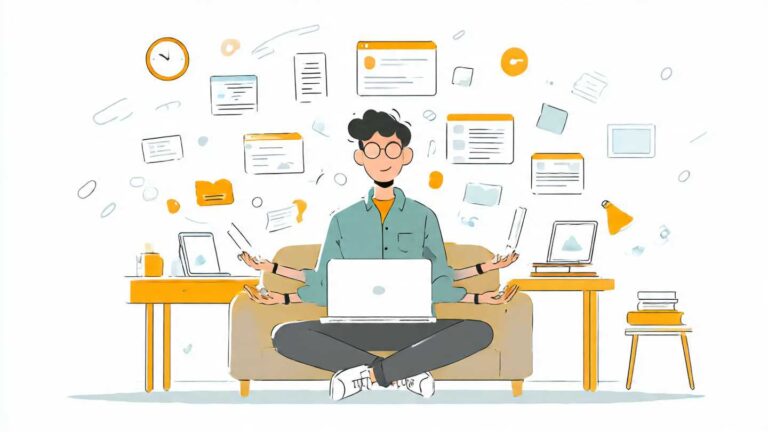
Today in this article we will discuss about the What is Popcorn Brain Syndrome in students? The Hidden Mental Overload of the Digital Age (When the Mind Never Stops Popping) so, Imagine sitting down to study, but your phone lights up with a notification. You check it, then another one appears. Five minutes later, you’re scrolling through short videos, switching between tabs, and thinking of three things at once. When you finally return to your textbook, your mind feels restless-like it’s still craving the next “pop” of stimulation.
- This constant craving for new information, quick updates, and instant gratification is now being described by psychologists as “Popcorn Brain Syndrome.”
The term doesn’t appear in medical manuals yet, but it’s becoming an increasingly relevant psychological metaphor for how digital overstimulation rewires the student brain, making deep focus, emotional regulation, and sustained thinking harder than ever.
What Is Popcorn Brain Syndrome?
Popcorn Brain Syndrome is a modern cognitive phenomenon where the brain becomes addicted to continuous bursts of online stimulation-like notifications, videos, and scrolling feeds-just as popcorn keeps popping in a heated pan.
- Coined by technology researcher David Levy, the term refers to a mind that’s constantly jumping from one digital input to another, struggling to slow down and process real-world experiences deeply.
- For students, this means that studying, reading, or engaging in long-term projects becomes mentally exhausting, while short-form, rapidly changing content feels natural and comforting.
In simple words, Popcorn Brain Syndrome is when your brain starts expecting life to move as fast as the internet.
The Science Behind Popcorn Brain (How the Digital World Rewires the Mind?)
Every notification, like, or scroll gives a small dopamine hit, the same neurochemical that drives motivation and reward. Over time, this creates a loop: the brain begins seeking frequent, rapid rewards rather than long-term satisfaction.
According to studies on neuroplasticity, the brain reorganizes itself based on repeated habits. When the habit is fast-switching attention, the neural pathways for deep focus weaken.
- The Prefrontal Cortex, responsible for decision-making and focus, becomes overworked and fatigued.
- The Limbic System, the emotional center, grows hypersensitive to quick rewards.
- The Default Mode Network, associated with imagination and introspection, is disrupted by constant interruptions.
As a result, students begin to experience symptoms similar to information addiction—constantly seeking stimulation, feeling uneasy during silence, and struggling to stay mentally still.
Signs and Symptoms of Popcorn Brain Syndrome in Students
Popcorn Brain doesn’t appear suddenly-it develops quietly, over months or years of digital overload. Here are some key symptoms commonly seen among students:
- Restless Attention: Difficulty focusing on one subject for more than a few minutes. The urge to check the phone or open a new tab is constant.
- Mental Fatigue Without Productivity: Even after hours online, students feel mentally drained but realize they’ve retained very little meaningful information.
- Reduced Reading Stamina: Long paragraphs or academic texts feel boring or difficult to finish. Minds wander easily.
- Impatience with Slow Processes: Students lose patience with slow teachers, slow Wi-Fi, or even slow conversations.
- Dopamine Withdrawal: When offline, students feel restless or anxious, as though something exciting is happening elsewhere.
- Emotional Flatness: Constant digital highs can dull emotional sensitivity, leading to reduced real-world empathy and attention to detail.
Also read: What Should Students Do When an Exam Paper Leaks?
Real-World Examples (How Popcorn Brain Affects Students Globally?)
- United States: A study by the Pew Research Center found that nearly 60% of college students check their phones at least once every 5 minutes, even during lectures. Professors report declining attention spans and weaker long-form writing skills.
- South Korea: Known for its tech-driven culture, researchers have identified what they call “digital dementia”—a state where young people show short-term memory loss from excessive screen time.
- Japan: High school students reportedly spend over 6 hours daily on digital media. Educators note rising levels of “cognitive scatter,” where students understand topics superficially but struggle to connect ideas.
- United Kingdom: In British universities, counseling centers report growing anxiety and insomnia among students who feel unable to “switch off” mentally at night.
These examples reveal that Popcorn Brain Syndrome isn’t limited to one country or culture-it’s a global byproduct of the always-connected generation.
The Psychology Behind the Syndrome
Popcorn Brain reflects a shift in cognitive habits—from deep to shallow thinking, from slow absorption to fast reaction. Educational psychologists link this to “attention fragmentation,” where students’ cognitive load is split across too many inputs.
1. Instant Gratification Trap: The digital world rewards speed over depth. Each scroll, like, or message provides a micro-reward, teaching the brain to chase novelty instead of mastery.
2. Cognitive Switching Cost: Switching between apps or tasks reduces productivity by up to 40%. Students believe they are multitasking, but in truth, they are constantly restarting their focus cycle.
3. Dopamine Tolerance: Just like tolerance in addiction, the brain needs increasing stimulation to feel satisfied. Over time, normal classroom activities or reading become “too slow” to engage interest.
Emotional Consequences (When the Mind Can’t Rest?)
Popcorn Brain isn’t only about focus, it’s also emotional. Students often describe a feeling of being “mentally busy but emotionally empty.”
- Chronic Anxiety: The fear of missing out (FOMO) leads to constant online checking, even during study sessions.
- Sleep Problems: Bright screens and late-night scrolling disrupt melatonin production, reducing sleep quality.
- Emotional Numbness: Quick entertainment blunts sensitivity to real emotions, making real-world interactions feel dull.
- Low Self-Esteem: Social media comparison deepens insecurities, especially when students equate self-worth with digital attention.
Psychologically, students are stuck in a paradox: constantly stimulated yet deeply unsatisfied.
How Popcorn Brain Impacts Learning and Creativity?
In education, deep work and reflection are essential. Popcorn Brain, however, encourages the opposite-rapid scanning without retention.
1. Shallow Learning: Students may remember facts but fail to understand underlying principles. They become consumers of information rather than thinkers.
2. Reduced Working Memory: Constant multitasking overloads working memory, reducing the brain’s ability to process and store information effectively.
3. Decline in Creativity: Creative thinking requires downtime-moments of boredom or reflection. Popcorn Brain removes these gaps, leaving no space for ideas to mature.
4. Loss of Flow State: True learning often happens in “flow,” a state of full immersion. Popcorn Brain interrupts flow with constant cognitive fragmentation.
The Educational Crisis (Teachers vs. Popcorn Brain)
Teachers worldwide are noticing this subtle crisis. Lessons once engaging now compete with the addictive pull of digital media. Classrooms must battle for attention not against boredom-but against a hyper-stimulated world.
- In Singapore, schools have begun implementing “digital detox hours” where students leave phones outside classrooms. In Finland, teachers promote mindful learning breaks, encouraging students to reflect between lessons.
Universities in the United States are redesigning courses around “attention training”, helping students build focus through structured silence, journaling, and task immersion.

How Students Can Reverse Popcorn Brain? (Solution)
Popcorn Brain isn’t permanent. The brain’s neuroplasticity means it can be rewired-but only through conscious practice.
1. Digital Boundaries: Set fixed times for digital engagement. Turn off non-essential notifications. Apps like Forest or Freedom can help limit distractions.
2. Single-Task Focus: Commit to one task at a time. Use techniques like the Pomodoro method-25 minutes of focused study followed by short breaks.
3. Slow Media Consumption: Choose long-form articles, books, or documentaries instead of endless short clips. This retrains the brain to sustain attention.
4. Mindfulness and Reflection: Daily meditation, journaling, or even short silent moments between classes can restore mental calm.
5. Rebuild Deep Learning: Engage with subjects deeply. Discuss ideas, write reflections, and connect concepts across disciplines.
6. Sleep and Nature Connection
Disconnect at least one hour before bed. Exposure to natural light, greenery, and real-world experiences helps reset overstimulated neural patterns.
Real Transformation Stories
- A student in Canada deleted all social media apps for 30 days and reported feeling calmer and more focused during lectures.
- A group of high schoolers in India started “Offline Sundays” where they collectively avoided screens. Within a month, their reading speed and retention improved.
- An engineering student in Germany began journaling every morning instead of checking his phone. He described it as “getting my brain back.”
These stories show that awareness and consistency can reverse the effects of Popcorn Brain-no expensive therapy required, just conscious living.
The Broader Lesson (Technology Should Serve, Not Steal)
Technology itself isn’t the enemy. The problem lies in uncontrolled consumption without cognitive rest. The same devices that distract us can also educate, inspire, and connect us-if used wisely.
- Students must reclaim their attention as an act of self-respect. A mind constantly fed by fragments will never digest wisdom.
As philosopher Nicholas Carr wrote in The Shallows, “What the Net seems to be doing is chipping away my capacity for concentration and contemplation.” The antidote is not rejection of technology, but mastery over it.
Conclusion: From Popcorn Brain to Peaceful Mind
Popcorn Brain Syndrome is not a disease but a mirror-reflecting how modern students are losing their ability to pause, think, and feel deeply.
- To overcome it, the world’s students must rediscover the beauty of slow thought-reading without rushing, learning without multitasking, and being present without scrolling.
Because in the end, education isn’t about how fast your mind pops with ideas-it’s about how deeply it understands them.